
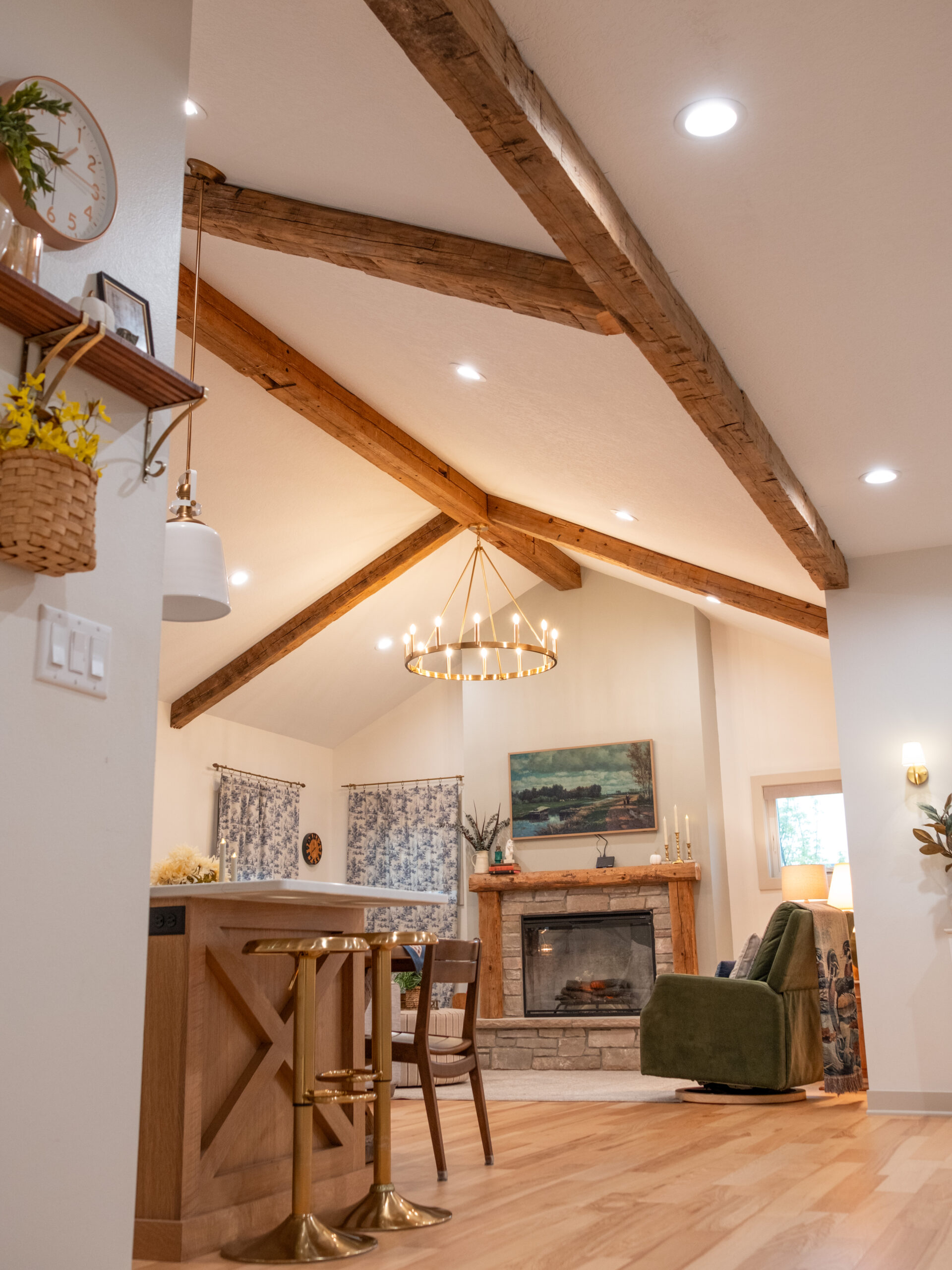
Reclaimed wood can be one of the most memorable materials in a building. It can also be one of the easiest materials to misunderstand when a project starts with a photograph instead of a plan.
A homeowner may be looking for six hand-hewn beams over a great room. An architect may need 15,000 square feet of wall and ceiling material with an approved color range. A general contractor may need box beams fabricated around structural steel. A hospitality project may need flooring, cladding, stair parts, and several truckloads of material to arrive in phases.
All of those buyers are shopping for reclaimed materials, but they are not buying the same product.
At Three Ten Timber, we think the useful question is not simply, “What does reclaimed wood cost?” The better question is, “What state does the material need to be in when it reaches the project, and what do you need it to do once it gets there?”
That is what determines the budget.
Current Reclaimed Wood Pricing, Late 2026
Pricing note: The ranges below reflect Three Ten Timber’s 2026 material pricing and are intended for early planning. They are not fixed quotes. Species, dimensions, length, texture, quantity, finish, processing, freight, and installation can change the final price.
For a quick sense of scale:
• Custom solid reclaimed beams commonly run from roughly $8 to $19 per board foot, with premium hand-hewn mixed-oak timbers at the upper end.
• Resawn reclaimed beams commonly run from roughly $16 to $32 per board foot.
• Reclaimed box beams commonly run from roughly $60 to just over $200 per linear foot depending on size, length, texture, and the number of finished sides.
• Most reclaimed solid flooring lands roughly between $9 and $17 per square foot before specialty finishing, while heavy thresher flooring can move into the $35 to $50 range.
• Reclaimed engineered flooring commonly falls in the low teens into the low $20s per square foot, with specialty wide or textured products higher.
• New engineered white oak made to carry a reclaimed or shrunk-face character commonly falls from the mid-teens into the upper $20s per square foot.
• Reclaimed wall and ceiling material commonly ranges from roughly $9 to the low $20s per square foot.
• Raw reclaimed siding and boards may begin around $4 to $7 per square foot and rise as sorting, cleaning, milling, and installation readiness increase.
Those numbers are only useful if you know what is behind them. A random bunk of historic boards is not the same product as a sorted, milled, finished, labeled package ready for an installer. A hand-hewn beam pulled from inventory is not the same product as one selected to exact dimensions, denailed, cleaned, repaired, cut to length, and prepared for a structural detail.
The price follows the amount of uncertainty that has already been removed.
Start With the Result, Not the Product Name
One of the most common mistakes we see is choosing a reclaimed product before deciding what job the material needs to do.
If the goal is structural mass, a true solid timber may be the right answer. If the goal is the look of a 12-by-12 hand-hewn beam over an LVL or steel member, a box beam may solve the problem better. If you want an entire room to feel warmer, flooring or ceiling cladding may have more impact than spending the same budget on a few isolated beams.
This matters even more on large architectural projects. A designer can spend a great deal of money trying to force one reclaimed product into every part of the building. The better projects usually decide where history should lead, then use quieter materials around it.
We are not a click-to-buy reclaimed material yard. Our reclaimed materials work usually starts with plans, finish schedules, inspiration images, quantities, and the character the project is trying to create. From there, we can help identify the right material, level of processing, fabrication, and installation approach.
Solid Reclaimed Beams: When the Real Timber Matters
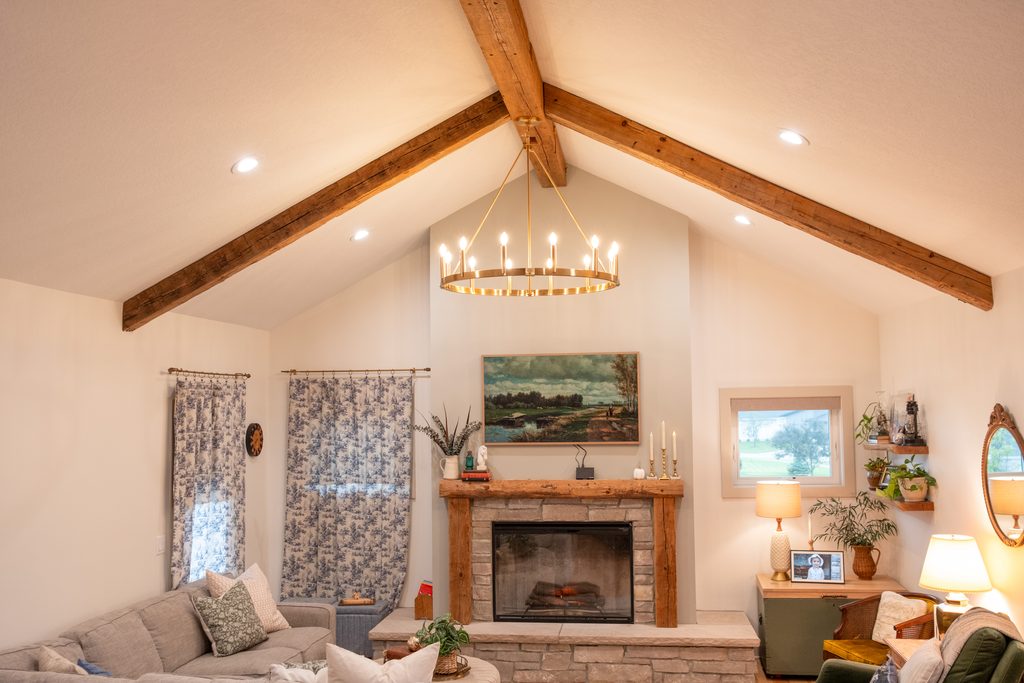
Solid reclaimed beams are the most direct way to bring historic structure into a new project. They may be hand-hewn, original-sawn, resawn, mixed hardwood, white oak, softwood, or another available species.
The appeal is easy to understand. A true hand-hewn timber carries axe marks, old mortises, peg holes, checks, and irregular surfaces that cannot be manufactured into new wood with complete authenticity.
The cost depends less on age than many people assume. Size, length, species, condition, surface character, exposed faces, and how exact the required dimensions are usually matter more.
A project that can accept mixed hardwoods, natural variation, and several available lengths gives us more ways to source efficiently. A beam schedule calling for exact white oak dimensions, long clear lengths, four exposed faces, filled mortises, and closely matched color narrows the usable inventory and increases shop work.
Use premium solid beams where their mass matters. Principal beams, structural posts, heavy trusses, great-room timbers, and fireplace mantels are places where a solid timber earns its cost. Hiding an expensive hand-hewn beam inside a wall usually does not.
Box Beams: Often the Better Answer for Modern Construction
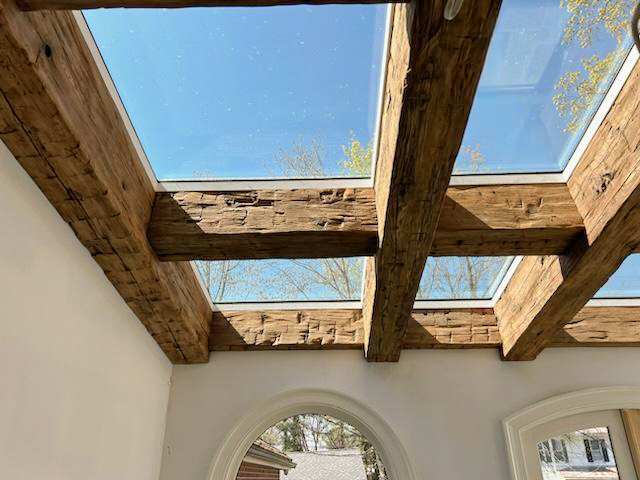
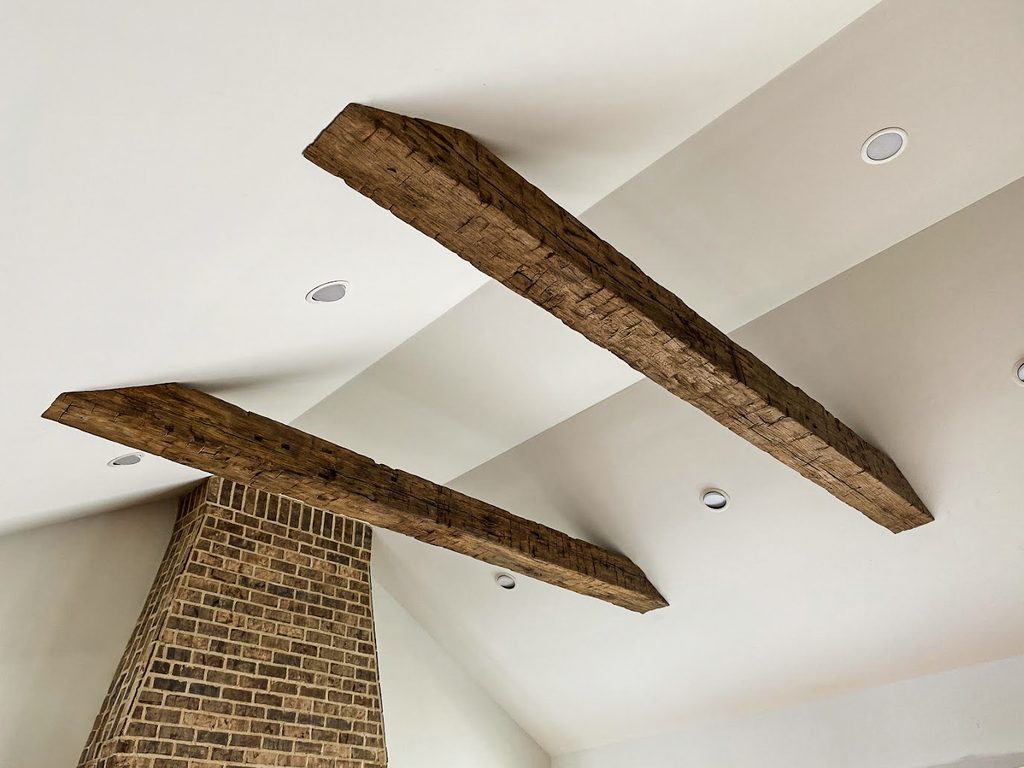
Box beams have become one of our most requested reclaimed products because they solve problems that solid timbers cannot solve as efficiently.
A reclaimed box beam uses real reclaimed wood faces to create the appearance and scale of a heavy timber while keeping the member hollow. That allows the beam to wrap structural steel, LVLs, engineered lumber, wiring, blocking, or other existing construction.
A good box beam should not read as a hollow decorative product once installed. The texture, corners, seams, and end conditions need to work together so the beam reads as one timber.
Three Ten Timber fabricates reclaimed box beams in hand-hewn, original-sawn, and resawn surfaces, along with modern options such as new hand-hewn white oak, character white oak, and pine. We can build two-sided, three-sided, and four-sided configurations depending on what the finished room exposes.
Late-2026 reclaimed box-beam pricing ranges from roughly $60 per linear foot for smaller, simpler resawn configurations to more than $200 per linear foot for large, long, four-sided hand-hewn beams. Modern character box beams generally fall within a similarly broad range, with species, size, length, and exposed sides driving the number.
Box beams make particular sense when the project needs repeated ceiling beams, long architectural runs, a wrap over steel or engineered structure, lower installed weight, or dimensions that would be difficult to source as solid historic timbers.
They also let the design team spend the reclaimed budget where people see it. There is little value in buying a massive solid timber only to hide most of it around a structural member.
Flooring: Original Reclaimed, Engineered Reclaimed, or New Wood With Historic Character
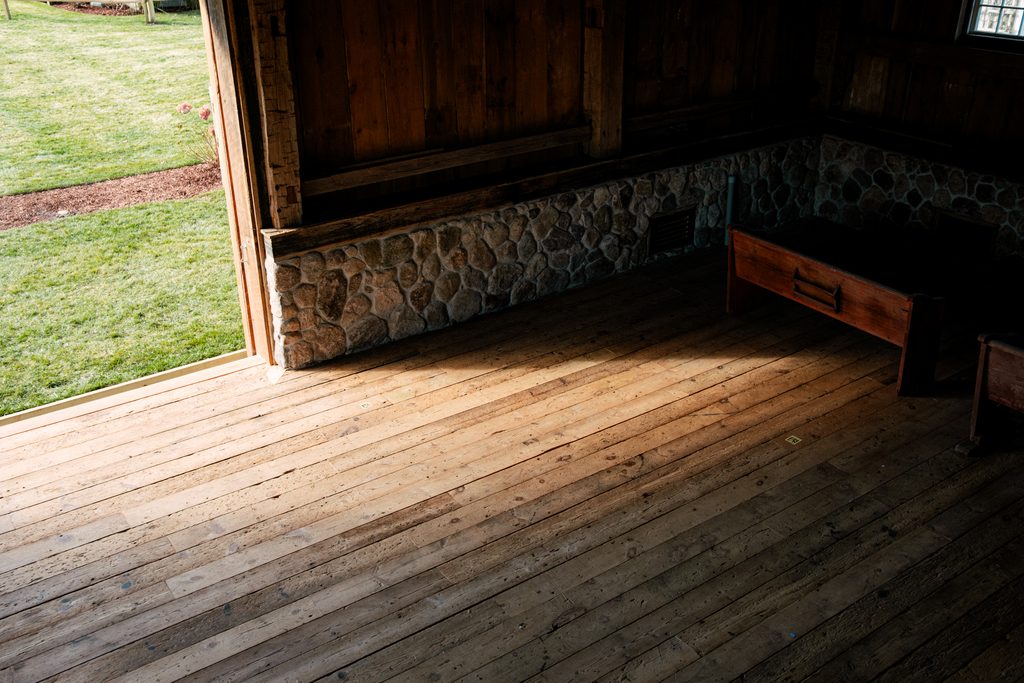
Flooring changes a room differently than beams do. Beams create structure and rhythm overhead. Flooring puts the material under every step.
We supply true reclaimed solid flooring, engineered flooring with reclaimed wear layers, and new engineered flooring that can carry a reclaimed or aged character. Each solves a different problem.
Original-face reclaimed flooring preserves more of the historic surface. Hit-and-miss milling leaves portions of that surface while flattening enough of the board for installation. Clean-face material reveals the aged grain under the original face. Thresher flooring comes from the heavy floorboards of old agricultural structures and can carry far more texture, thickness, and wear.
Most reclaimed solid flooring in our late-2026 pricing falls roughly between $9 and $17 per square foot before specialty finishing. Thicker and wider thresher products can run much higher.
Engineered reclaimed flooring places a reclaimed wear layer over a stable substrate. That can make sense on concrete slabs, radiant-floor systems, wide-plank installations, or buildings where dimensional stability matters. Many reclaimed engineered products currently fall from the low teens into the low $20s per square foot.
We also offer new engineered white oak with shrunk-face, band-sawn, or hand-sanded textures for projects that want the visual depth of reclaimed material with more predictable new-wood supply. Those specialty products generally run from the mid-teens into the upper $20s per square foot before custom options.
There is no rule that the most distressed floor creates the best room. We often prefer a quieter floor when hand-hewn beams already carry the visual weight. In another project, the floor may be the main reclaimed feature and deserve more texture, width variation, and original character.
Wall and Ceiling Cladding: A Large Visual Return Without Structural Complexity
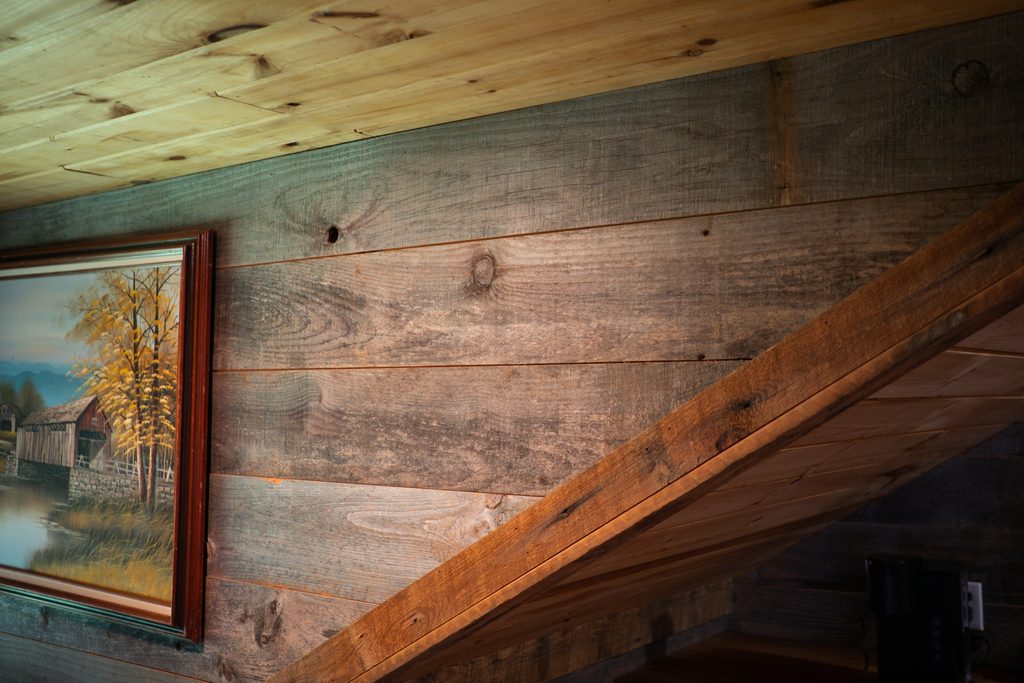
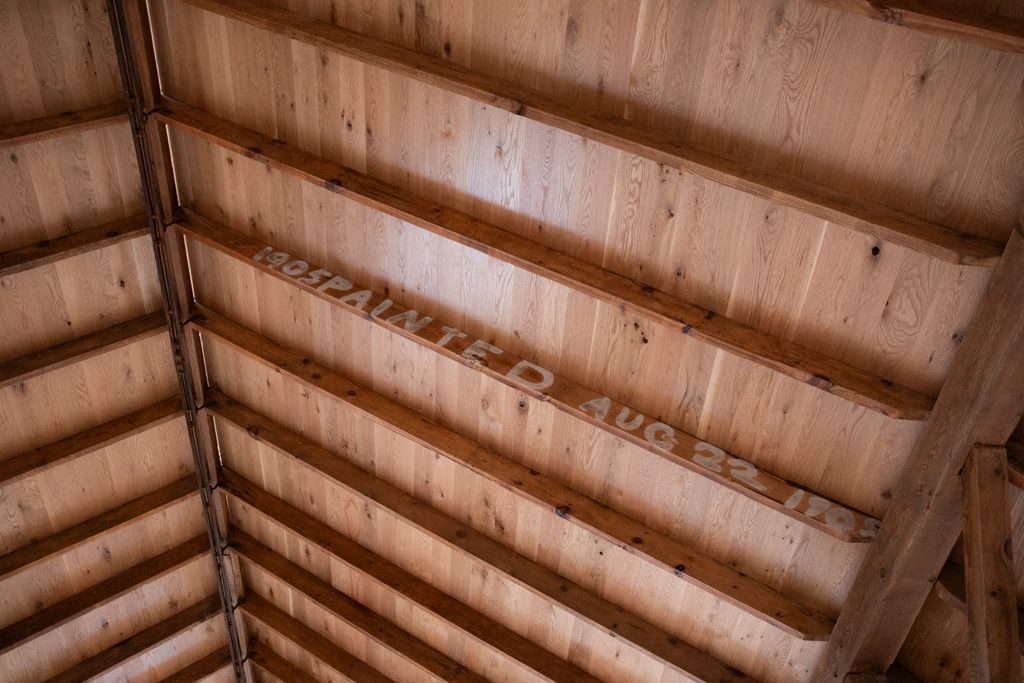
If the goal is to change how an entire room feels, wall and ceiling cladding can produce one of the strongest visual returns in a reclaimed package.
It spreads color, age, grain, nail holes, saw marks, and variation across a large surface without requiring each board to carry a structural load.
We supply historic American oak, mixed hardwoods, softwoods, weathered barn siding, natural gray material, brown board, selected color blends, and other reclaimed wall and ceiling products. Current pricing commonly runs from roughly $9 into the low $20s per square foot depending on species, face, width, length, sorting, and finish.
The important design decision is restraint.
A hand-hewn frame, heavily distressed floor, weathered wall, rough ceiling, rustic cabinets, and an oversized mantel can all be good materials on their own. Put every one of them in the same room and they can compete.
We prefer giving the reclaimed material a clear job. A ceiling may carry the history while the walls stay quiet. One feature wall may anchor a commercial space. A gable may use reclaimed boards while the floor stays clean. The result usually feels more intentional and the budget goes farther.
Exterior Siding, Log Skins, Mantels, and Custom Millwork
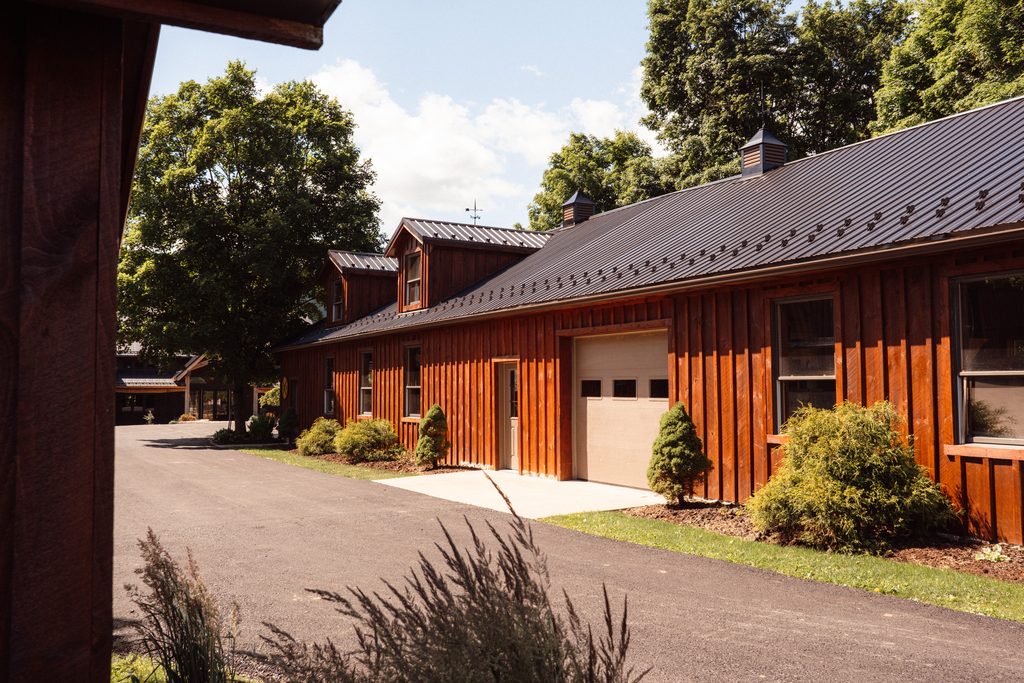
Not every project needs a full reclaimed timber package.
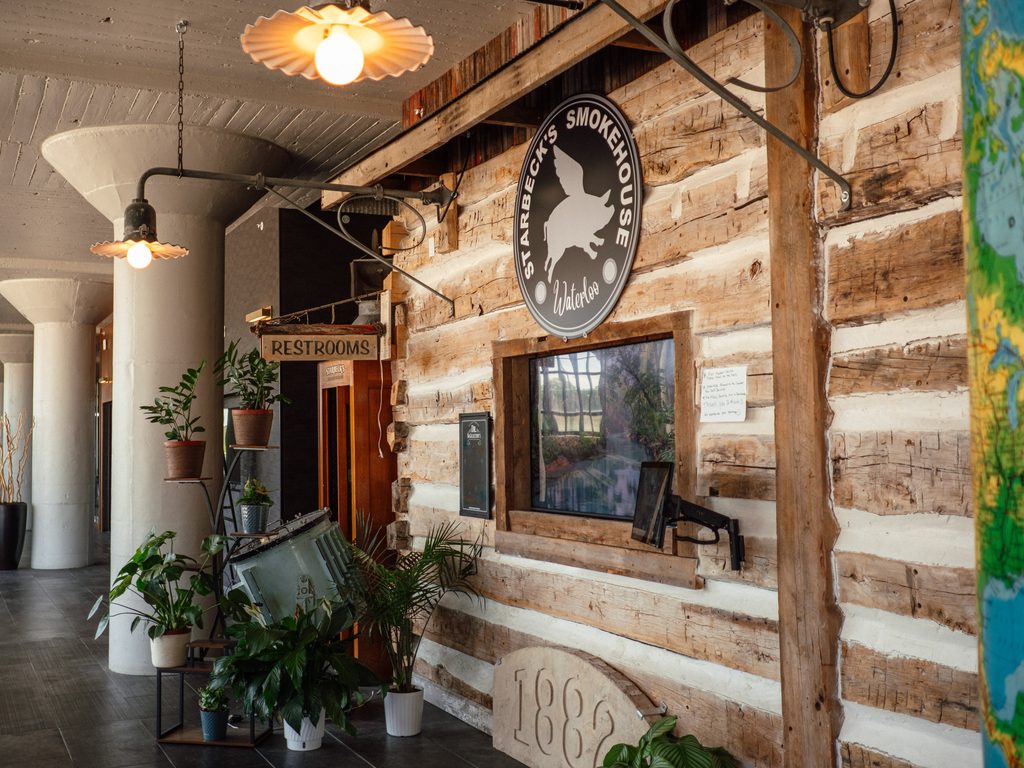
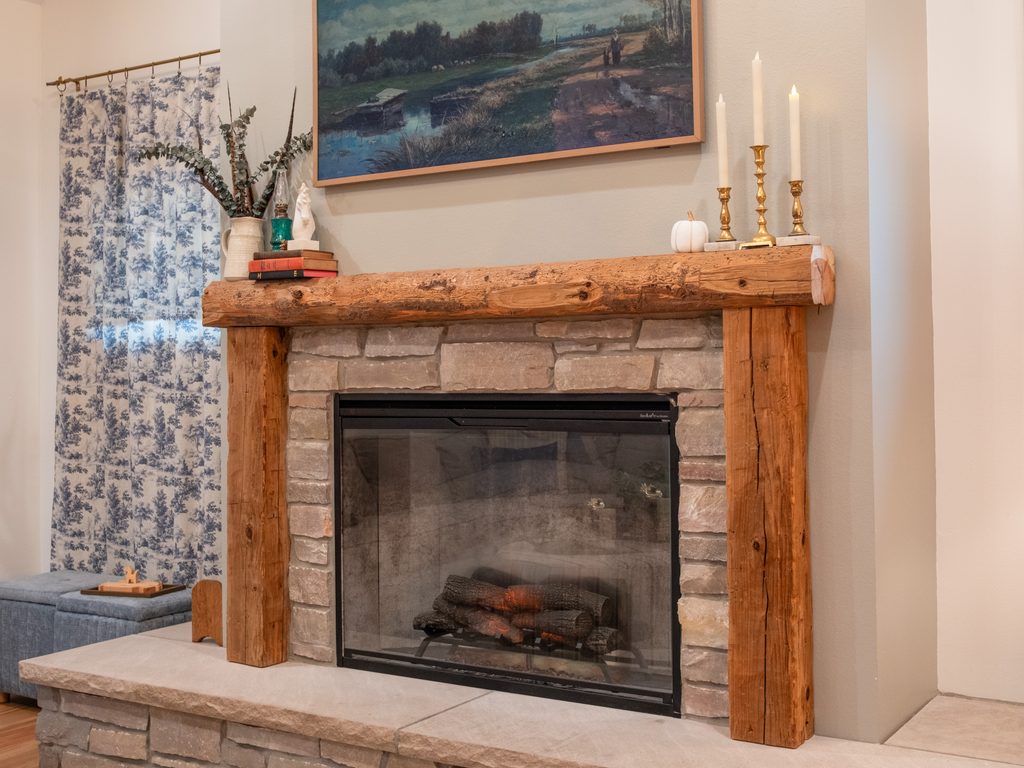
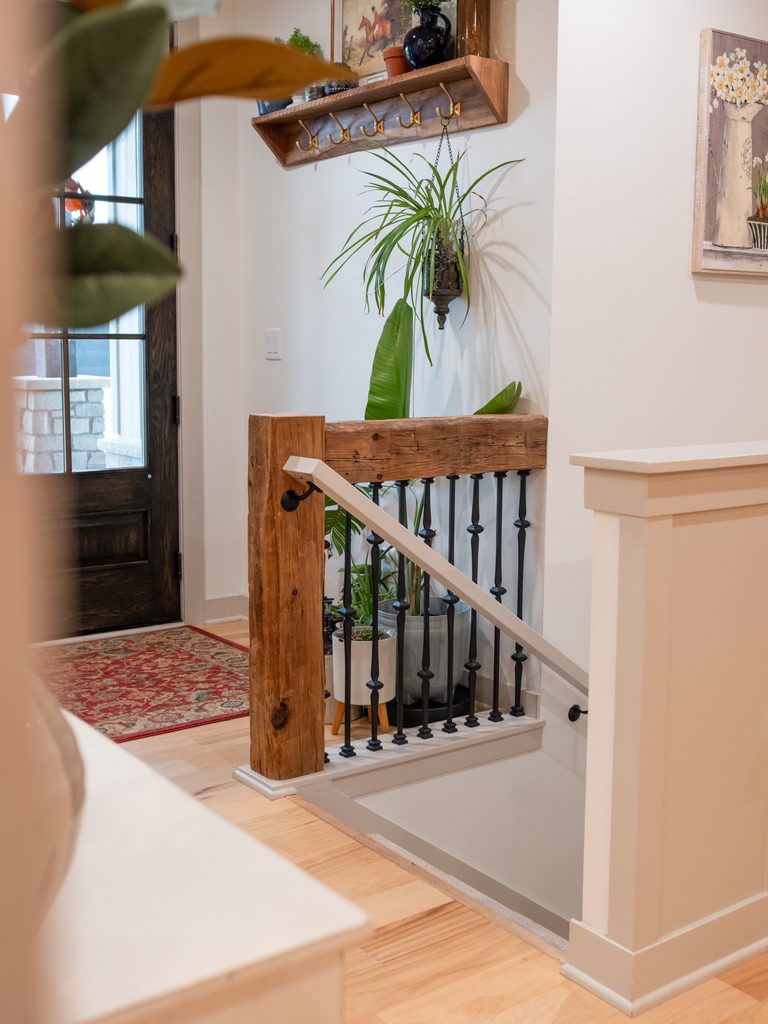
Weathered barn siding can give an exterior real age that new siding cannot reproduce. Reclaimed log skins can give a cabin, lodge, restaurant, or feature wall authentic log texture without requiring a complete structural log wall. Mantels, shelves, stair parts, fireplace surrounds, tables, countertops, and custom millwork can carry the same material story in smaller doses.
Our log skins commonly come from sleeper material and other historic heavy members. They can be milled with natural edges or prepared for specific widths, corners, and installation details. Mantels and shelves can use hand-hewn, original-sawn, resawn, or cleaner faces depending on the room.
These pieces often deliver more impact than their quantity suggests. A single hand-hewn mantel or a carefully detailed log-skin wall can establish the material language for an entire room.
Where New Material Belongs
Reclaimed is not automatically the right answer for every component.
Some projects need dimensions, quantities, color consistency, or schedules that historic inventory cannot satisfy efficiently. In those cases, new white oak, new hand-hewn material, character-grade oak, pine, or new engineered flooring can complement the reclaimed material rather than compete with it.
This is especially useful when a large project wants one consistent visual language across several buildings or thousands of square feet.
We would rather mix reclaimed and new material deliberately than force scarce historic material into a place where it creates unnecessary cost, lead time, or inconsistency.
Buying Reclaimed Material for a Large Commercial or Architectural Project
Large material packages need a different process than buying six beams for one room.
We handle large commercial, hospitality, residential-development, and architectural orders nationwide. Those projects may involve thousands of square feet of flooring or cladding, dozens of beams or wraps, custom millwork, several finish samples, staged production, and multiple freight loads.
The earlier the material team enters the design conversation, the better.
Before a large specification becomes fixed, we want to understand the quantity, required dimensions, acceptable length ranges, species, surface character, color expectations, visible faces, structural or decorative use, finish, installation method, delivery sequence, and schedule.
For architects and design firms, we can provide comprehensive sample sets so the design team can compare species, face treatments, milling, color, and finish before a large order moves into production.
On larger projects, one unusually clean sample should not become an accidental standard for 20,000 square feet of naturally variable material. We prefer setting an approved range, then building the order around that range.
This is also where our construction experience matters. We do not only source reclaimed wood. We fabricate and install it. That means we can help catch details involving attachment, steel or LVL wraps, transitions, exposed faces, field measurements, sequencing, and access before the material reaches the jobsite.
Raw, Selected, or Install-Ready: Decide Where You Want the Labor to Happen
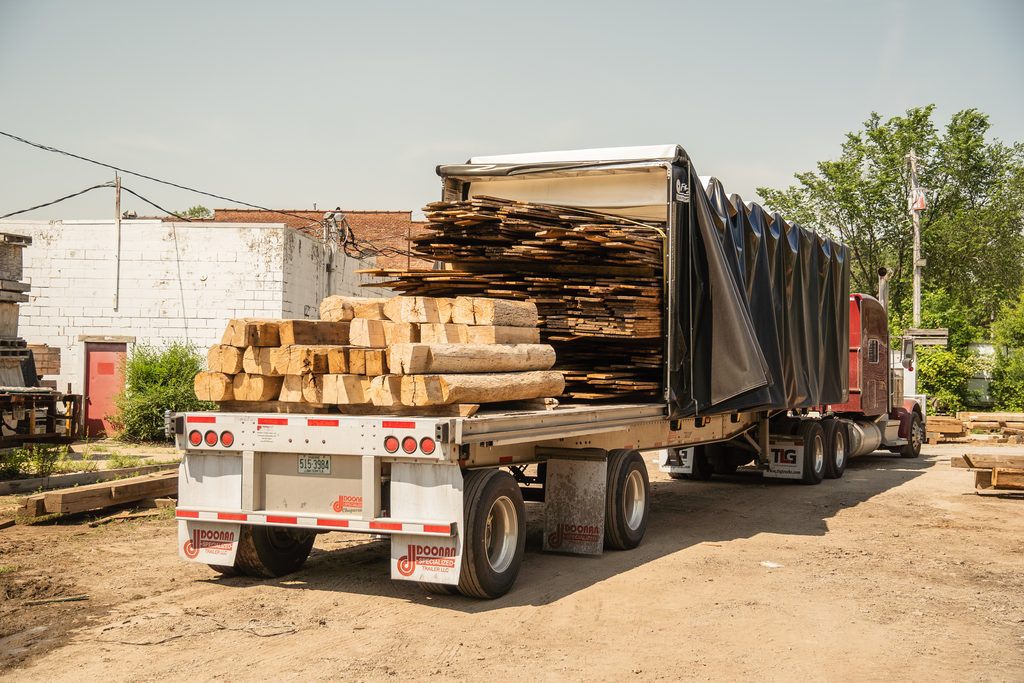
A low material price can be attractive until the jobsite inherits all the work that price left out.
Raw material works well for buyers with a capable shop and labor to sort, denail, clean, trim, mill, and grade pieces for the application. It gives the buyer more flexibility and more responsibility.
Selected material narrows the inventory to the sizes, species, color, or surface the project needs.
Install-ready material moves more work into a controlled shop environment. Depending on the product, that may include metal detection, denailing, washing, brushing, heat treatment, milling, repairs, cutting, finishing, labeling, and packaging.
Neither approach is universally better.
The right answer depends on who is installing the material and where you want the uncertainty to live. A contractor with a mill and an experienced crew may create value from raw stock. A high-end interior project on a tight schedule may save money overall by receiving a more complete package.
Where to Spend and Where to Stay Flexible
If the budget has limits, spend more where people will see the material closely or where it defines the architecture.
Principal beams, trusses, fireplace mantels, great-room ceilings, entries, stair components, restaurant interiors, signature walls, and public hospitality spaces can justify more selection and fabrication.
Stay flexible where one face remains concealed, mixed lengths can be blended, color variation supports the design, mixed species are acceptable, or the installer can work efficiently from grouped inventory.
The expensive mistake is not choosing the cheaper product. It is paying premium selection costs for material nobody sees, or buying inexpensive raw stock when the project has no practical way to process it.
How to Get an Accurate Reclaimed Material Quote
The fastest way to get useful pricing is to give us enough information to understand both what matters and what can remain flexible.
For beams and box beams, send dimensions, quantities, lengths, exposed sides, structural or decorative use, species preferences, and drawings showing what the members connect to or wrap.
For flooring and cladding, send net square footage, room dimensions, preferred widths, face character, finish expectations, installation type, and any fixed-length requirements.
For large architectural orders, send plans, reflected ceiling plans, finish schedules, elevations, material takeoffs, reference images, and the desired delivery sequence.
If you are early in design, send inspiration images and a rough quantity. We can help narrow the material before the specification becomes expensive to change.
Planning a large reclaimed material package? Request comprehensive sample sets, send us your drawings or finish schedule, and tell us what you are trying to create. We can help with material selection, pricing, custom fabrication, freight, and nationwide installation.
More Than a Material Supplier
Three Ten Timber sources reclaimed materials for projects across the United States, but material supply is only part of the work.
We also design and fabricate timber frames, build box beams and custom millwork, restore historic structures, coordinate large material packages, and send construction crews nationwide when a project needs specialized installation.
That changes the conversation. We can look at a beam not only as inventory, but as something that has to fit a drawing, clear a piece of steel, meet an installer at the right stage of construction, and look right when the room is finished.
Review our reclaimed materials, see how we have used them in completed projects, or send us your material schedule for a current quote and sample package.
Frequently Asked Questions
How much does reclaimed wood cost?
Late-2026 pricing varies widely by product and processing. Raw boards may begin in the mid-single digits per square foot, custom solid beams commonly range from roughly $8 to $19 per board foot, reclaimed box beams can range from about $60 to more than $200 per linear foot, and many flooring and cladding products fall from the high single digits into the low $20s per square foot. Specialty products can run higher.
Can Three Ten Timber handle large commercial material orders?
Yes. We supply and coordinate reclaimed material packages for commercial, hospitality, architectural, and large residential projects nationwide. Large orders should begin with drawings, quantities, finish requirements, sample approval, production planning, and freight coordination.
Can architects and designers request samples?
Yes. We can provide comprehensive sample sets for projects that need to compare species, textures, face treatments, milling, and finish before material is specified or ordered.
Are reclaimed box beams cheaper than solid beams?
Not automatically. They use less mass and can reduce structural and installation demands, but they require fabrication and real reclaimed face material. Their value often comes from dimensional flexibility, lower weight, and the ability to wrap steel or engineered structure.
Should I use reclaimed material everywhere?
Usually not. The strongest projects decide where reclaimed material should lead, then use quieter supporting materials around it. Concentrating premium material in the places people see and touch can create more impact and keep the budget under control.


